Many advice firms outsource suitability reports when volume outgrows the team. It works, and many firms rely on good outsourced paraplanners. But AI drafting tools now give firms a third option. It's worth knowing how they compare.
This guide looks at outsourcing, hiring in-house and AI-assisted drafting side by side. For background on suitability reports, see our complete suitability report guide.
The three options
1. Outsource to a paraplanning service or freelancer
You send the case file; a report comes back.
2. Hire or grow an in-house paraplanning team
Reports are written by your own people, in your own process.
3. AI-assisted drafting
Software drafts the report from your case file, in your template. Your paraplanner or adviser reviews and signs off.
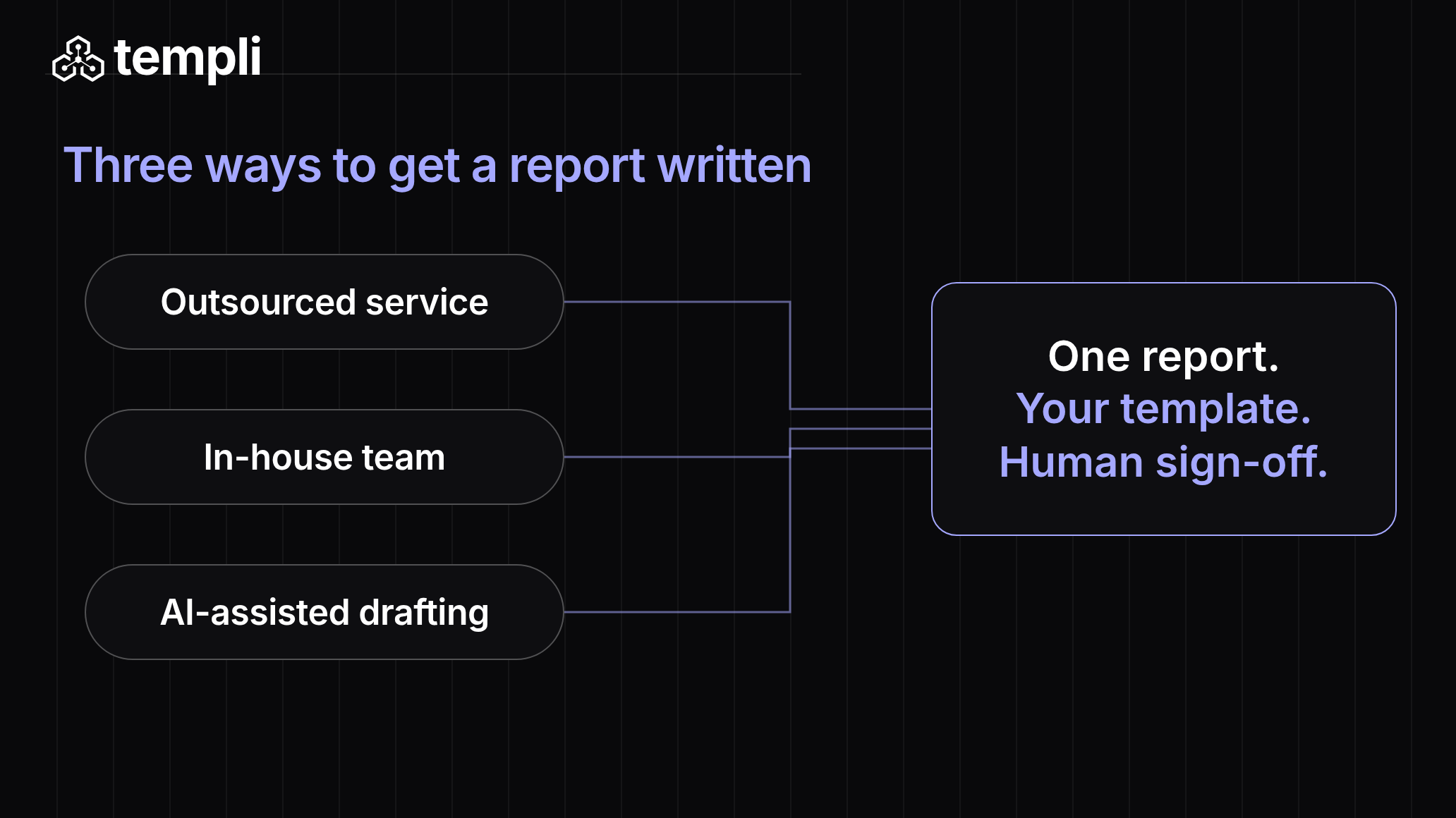
These aren't either/or. Many firms combine them – for example, AI drafting used by in-house paraplanners, with outsourcing for overflow.
How they compare
| Outsourced | In-house | AI-assisted drafting | |
|---|---|---|---|
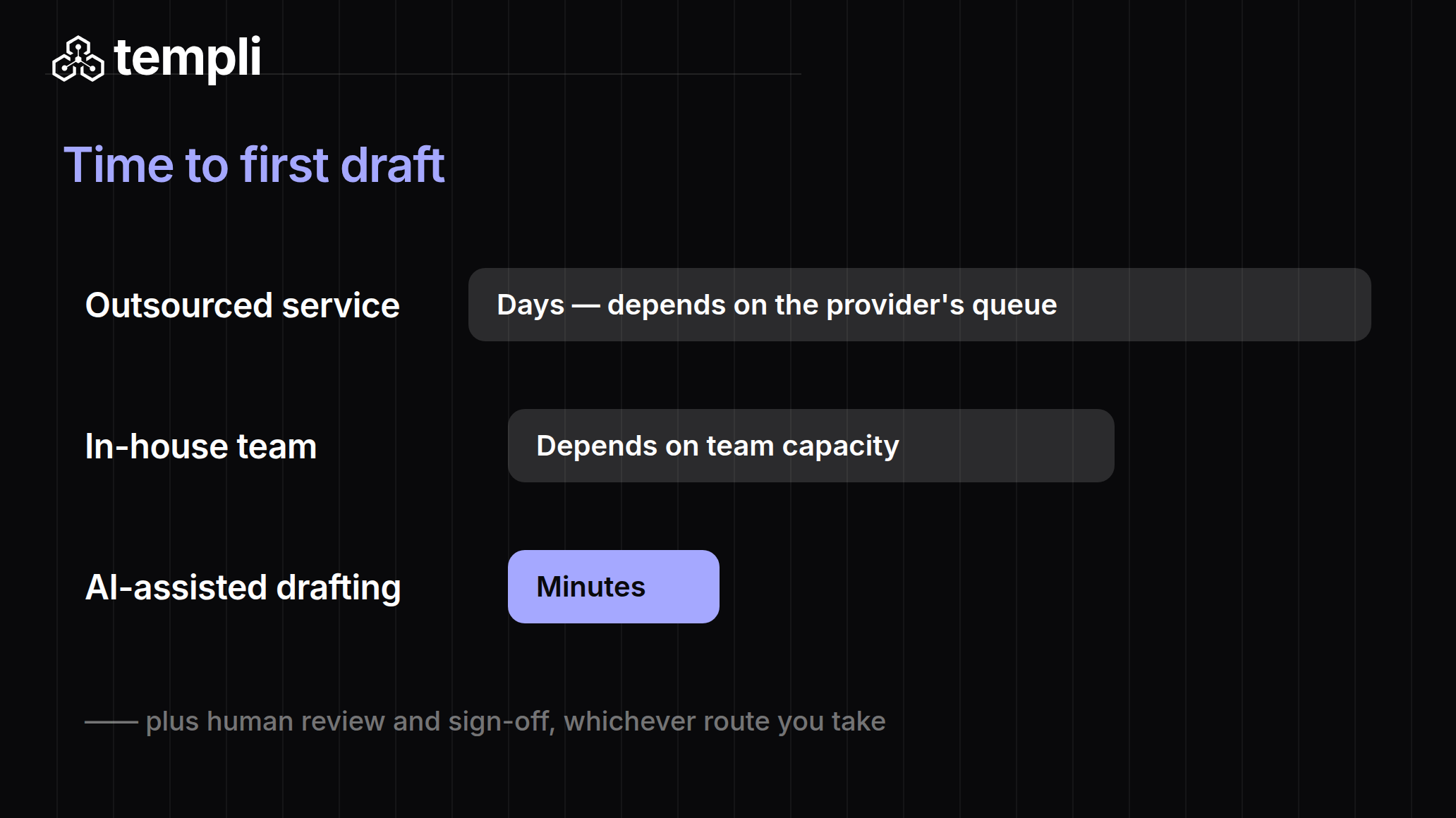
| Turnaround | Often days, depends on the provider's queue | Depends on team capacity | First draft in minutes; review time on top |
| Cost | Per report | Salary and overheads | Subscription |
| Uses your template | Usually, if briefed well | Yes | Depends on the tool – check this |
| Consistency | Varies by writer | Varies by person | Consistent structure every time |
| Control and review | Firm reviews the finished report | Full control | Firm reviews every draft, with sources |
| Scaling up | Add capacity with the provider | Hire | Handles more cases without more hires |
For a closer look at outsourced paraplanning specifically, see more on paraplanning services vs software.
When outsourcing makes sense
- You need specialist expertise for complex cases, such as DB transfers
- Volume spikes are short-term
- You don't have anyone in-house to review drafts
When AI drafting makes sense
- You write a steady volume of reports in a consistent template
- Turnaround time is slowing advice down
- You want reports to read the same whichever adviser the client sees
- You'd rather your paraplanners spent time on checking and judgement, not typing
If you're weighing up tools, here's what to look for in suitability report writing software.
See it against your current process.
Bring a recent case and your template. We'll show you what Templi drafts, and you can compare it with what comes back from outsourcing.
Questions to ask before switching
- How long does a report take today, from fact find to sign-off?
- How many rounds of edits does an outsourced report usually need?
- Does every report follow your template exactly?
- Who reviews the final report, and how long does that take?
Where Templi fits
Templi drafts suitability reports inside your firm's own Word template, from the fact find, meeting and research. Every statement links back to its source, so your paraplanner can check it quickly. Nothing is final until a person approves it. How firm-standard templates keep reports consistent →
It's not a replacement for paraplanners. It takes on the drafting so your team can focus on the advice. Templi for paraplanners →
See how Templi drafts suitability reports →
Next step
Book a demo to compare Templi with your current process. And for the full picture on writing suitability reports well, read our suitability report writing guide.
Next step
Compare it against your current process.
Templi is an advice-native AI workflow system for UK advisers and paraplanners. It drafts suitability reports inside your firm's own template, with reviewable outputs, visible sources and human approval at every step.