Every week, Templi gets better at the work advice teams handle between client conversations.
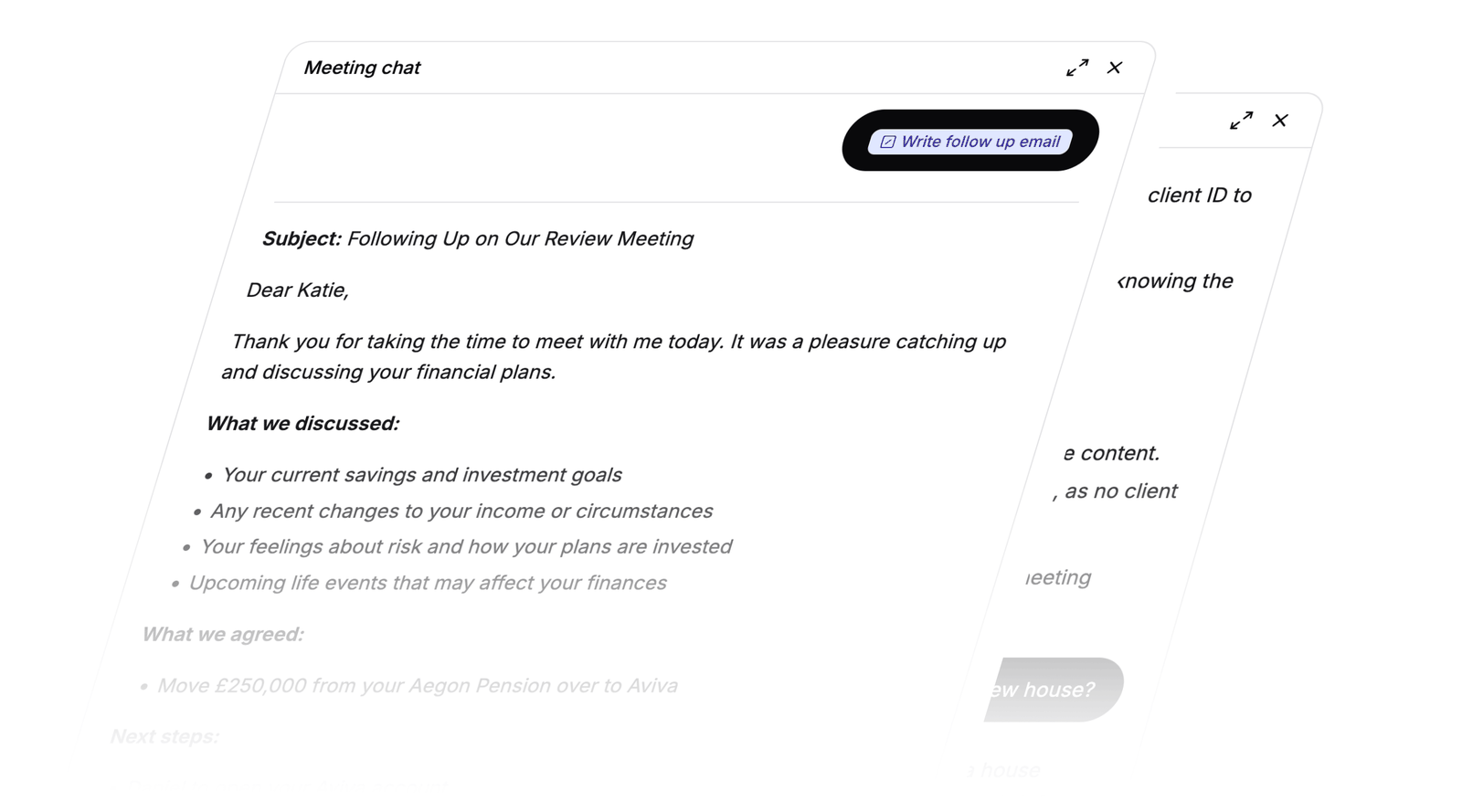
This release brings more of the meeting workflow into one place. The main update is meeting chat in Templi Adviser: a new workspace where users can ask questions from a meeting transcript, pull out client context, draft follow-up emails, and run meeting preparation.
We have also added reusable firm instructions in Settings and a clearer way to map client relationships across households, businesses, trusts, and charities.
Ask more from every meeting
A client meeting creates a lot of useful context. Some of it is obvious: agreed actions, client objectives, questions to answer, documents to prepare. Some of it is less obvious: how the client described a change, what was implied but not resolved, or which detail needs checking before the next step.
Meeting chat is built for that moment after the conversation, when the adviser needs to turn the meeting into clear follow-up work.
Users can now ask Templi Adviser questions directly from the meeting transcript, such as:
- What did we agree with the client?
- What changed since the last review?
- What actions need to happen next?
- What client context should I consider before drafting the follow-up?
- What should I prepare before the next meeting?
From the same workspace, they can draft follow-up emails or prepare for an upcoming meeting, with the transcript and client information close to hand.
The aim is simple: less switching between tools, less rebuilding the context from memory, and a clearer path from meeting conversation to next action.
Reusable firm instructions
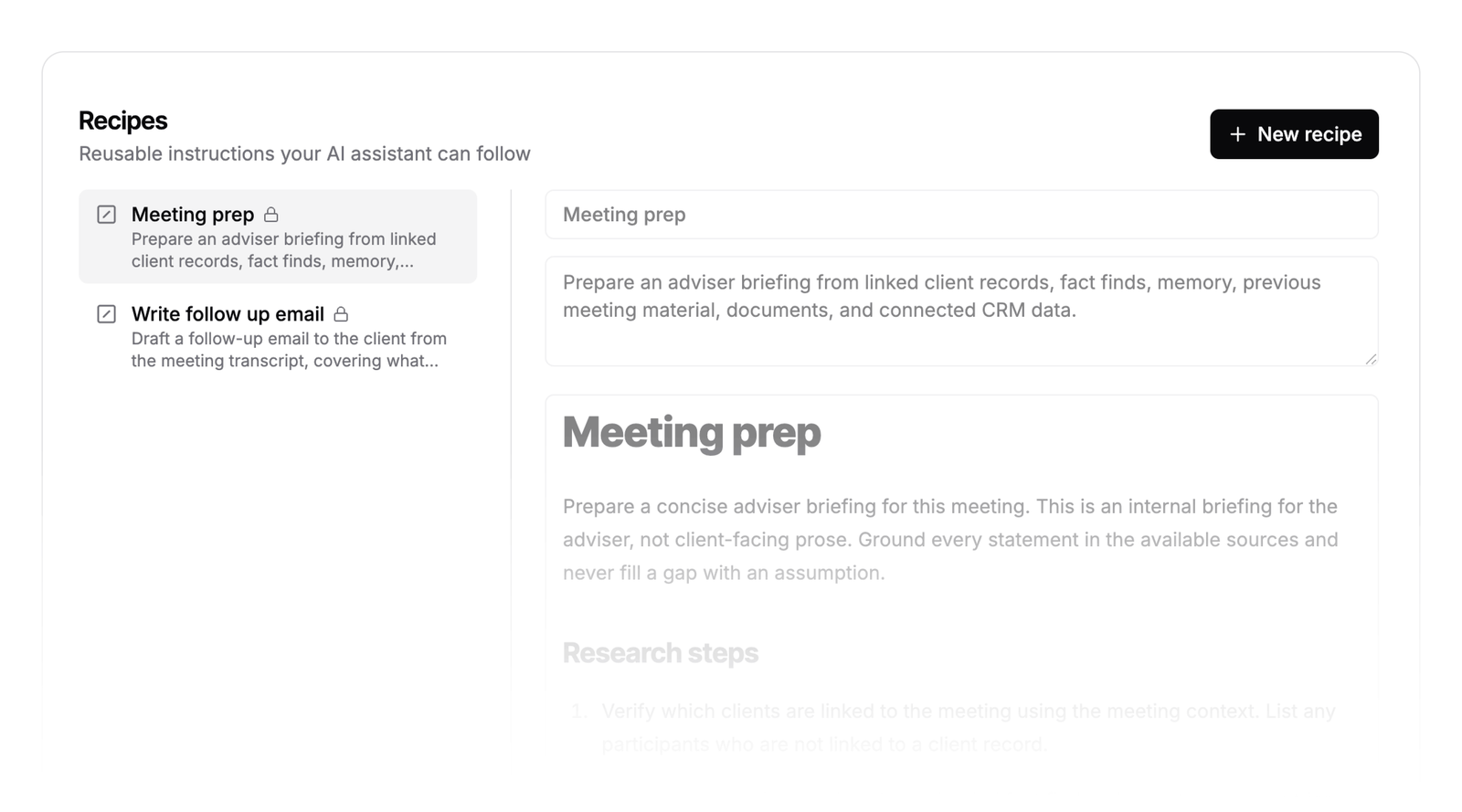
Firms can now create and manage reusable instructions in Settings.
These instructions help Templi reflect the firm's terminology, processes, and preferred ways of working across Templi Adviser and Templi Paraplanner.
For advice teams, this means recurring drafting and preparation work can feel closer to the firm's own standard. Instead of restating the same preferences each time, teams can set clear instructions once and update them as firm practices evolve.
It is a practical way to make Templi work more naturally inside the firm's existing habits, templates, and expectations.
A clearer view of client relationships
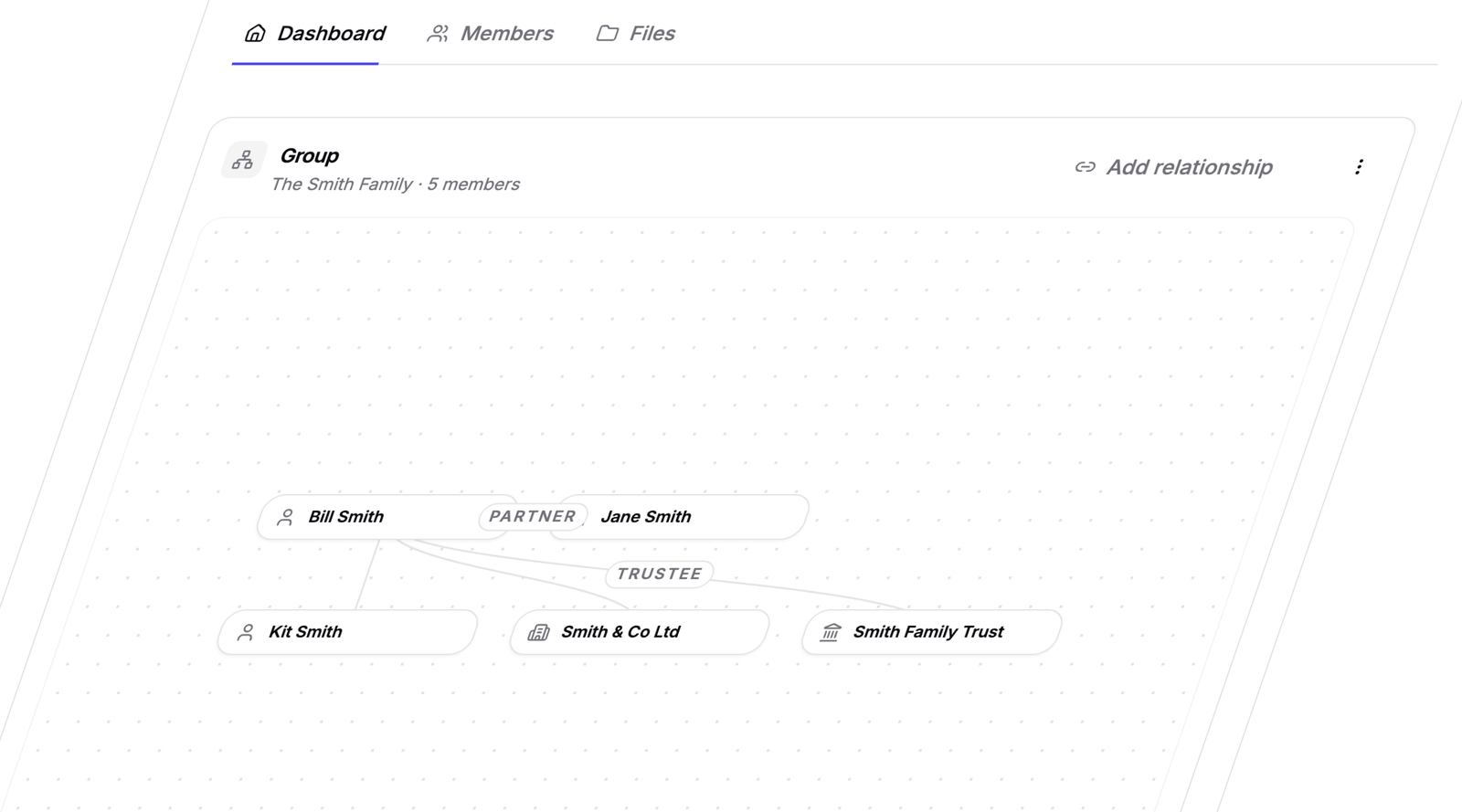
Templi now gives teams a clearer way to organise the people and entities connected to a client record.
Users can group related clients, classify records as individuals, businesses, trusts, or charities, and record relationships such as partners, dependants, shareholders, directors, trustees, and beneficiaries.
That matters because advice often depends on more than one person or entity. A household, business, trust, or family relationship can shape the context behind the work.
By making those relationships easier to see, advisers and paraplanners can understand the wider client picture before drafting, preparing, or reviewing.
Why this matters
This release is about carrying more useful context through the workflow: from the meeting conversation, into the follow-up, into firm-standard instructions, and across the relationships that shape the advice.
Meeting chat helps advisers ask more from every meeting. Reusable instructions help firms keep Templi closer to their way of working. Relationship mapping gives teams a clearer view of the people and entities behind the advice.
More time with clients. Less admin. No change to how your firm works.
Weekly product update
See how meeting chat fits into your advice workflow
Book a walkthrough with the Templi team to see how meeting chat, firm instructions, and relationship mapping support the work between client conversations.